Pittsford: Preservation or Progress

Preservation and progress do not have to be at odds with each other. Yet, many of us are paying attention to proposed changes to Section 106 of the National Historic Preservation Act. The first challenge is understanding what Section 106 actually does.
In simple terms, it applies when a federal agency funds, permits, licenses, or approves a project that may affect a historic or culturally significant place. It does not automatically stop a project. It requires the federal agency to look at what is there, consider what might be affected, and consult before the decision is effectively made.
One of the clearest examples here in Pittsford is Hopkins Farm and what became Calkins Road Middle School. The school district originally considered a much larger high school on the site. Because of federal involvement, the U.S. Army Corps of Engineers participated in Section 106 consultation alongside New York’s environmental and historic preservation review. What ultimately emerged was different. The district pursued the less-intensive middle school option. The building was placed farther from the historic property, and its parking, landscaping, mechanical systems, traffic improvements, and relationship to the surrounding landscape were considered as part of efforts to reduce the impact. (Matter of Hopkins v Mills (N.Y. Civ. Ct. 2005))
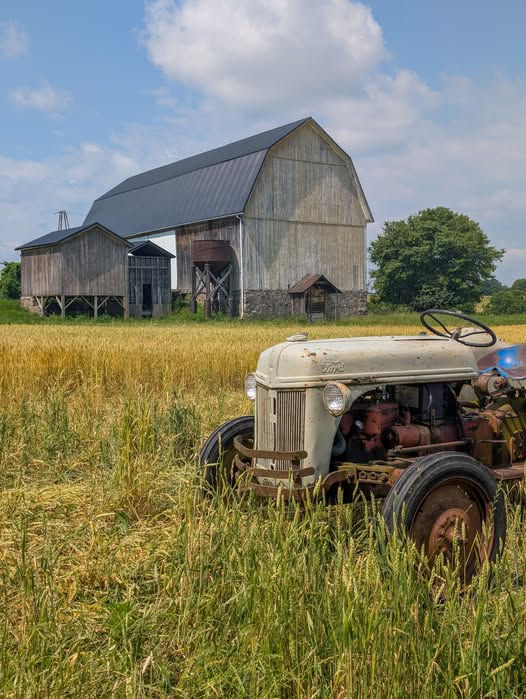
Section 106 was not the only reason the project changed. State environmental and preservation laws mattered too. But the process helped make sure the historic landscape had a place in the decision. Would the same decisions have been made without Section 106? Perhaps. But without it, one less level of government, or, represented constituency, would have been required to ask what was there, what could be lost, and whether there was another way to accomplish the same goal.
The Erie Canal Park and Preserve gives us a different example. Before the Town developed the property, archaeological work was done because there was a possibility that something significant could be there. Researchers looked, found nothing requiring additional investigation, and the project moved ahead. (Village of Pittsford Planning and Zoning Board of Appeals, 11/18/19 Packet). Preservation review is sometimes treated as though its purpose is to stop things. Sometimes the process is simply: look, document, move forward.
When Verizon proposed a 105-foot telecommunications tower near West Bloomfield Road, Pittsford was invited to participate in the Section 106 process. The review in 2022 considered archaeology and potential effects on nearby historic properties.
Historic preservation, especially in a community like ours, is not just about whether somebody wants to tear down an old house. It can involve farms, landscapes, neighborhoods, archaeological sites, historic districts, the Erie Canal, and the setting around a historic property. (Design Review & Historic Preservation Board , 11/10/22 Packet).
So what would it mean if some federally connected projects could skip this process? It would not mean every historic property suddenly becomes vulnerable. New York has its own environmental and preservation laws. Pittsford has local planning, zoning, and preservation rules. Other protections may apply. But Section 106 adds something specific: an obligation for the federal agency itself to consider historic resources before its decision is complete. Take that obligation away and those questions may still get asked. They also may not.
The federal regulations governing Section 106 are being reconsidered. Proposed revisions are moving forward, but the actual regulatory language is not yet public. Preservation organizations, Tribal Nations, municipalities, developers, property owners, and others know changes may be coming without yet knowing exactly what those changes will be.
If you search news for Section 106 right now, you will find plenty of alarm. There is understandable distrust and concern about what may be coming. But it does not help us to argue about regulations we haven’t read from what will be actual proposed changes. There may be parts of the current process that could be simpler, faster, or clearer. Efficiency is not a bad goal. But faster is not automatically better if what gets lost is the opportunity to ask an important question while there is still time to do something with the answer.
Pittsford has good reason to pay attention. We live alongside the Erie Canal. We have historic farms, neighborhoods, archaeological resources, historic districts, and a Village whose buildings and streets tell part of the story of this community. Our history also reaches much farther back; this landscape has an Indigenous history that deserves recognition and respect.
We also build things. Sidewalks and trails. Roads and parks. Telecommunications infrastructure. We pursue grants and work with county, state, and federal agencies to get things done. Preservation and progress are not opposite sides of a fight. Local government has to consider both.
When the proposed regulations are published, we can finally read them and decide what they mean for communities like Pittsford. We can ask whether towns and villages still have a meaningful voice, whether historic resources are considered while alternatives are still possible, and whether “streamlining” improves the process or removes something important from it.
There is important work we can do before then: understand what Section 106 does, how it has mattered here, and what to look for when the public-comment window opens. The public comment window is only 30 days and it will go quickly. Better to learn the process now so we can spend that limited time examining the actual changes rather than starting from scratch.
Pittsford has a lot of good folks who like to do their homework. Let's be ready.


Comments